Pressure Washing Guide: What It Can Clean, What It Can Ruin, and Cost
Pressure washing typically costs $100 to $250 for a driveway, $200 to $450 for house siding, and $150 to $350 for a deck, with the price set by area, access, and how dirty the surface honestly is. Used at the right pressure it is the fastest way to restore concrete, pavers, and durable siding — and used carelessly it etches concrete, strips paint, shreds soft wood, and drives water behind siding, which is why knowing what not to blast matters as much as the price.
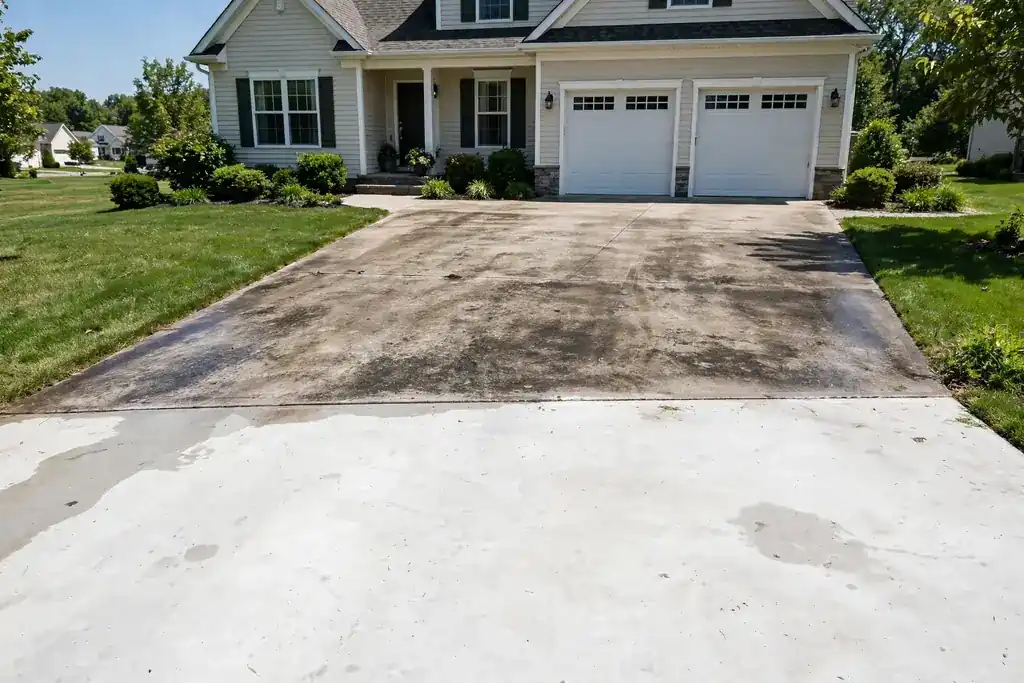
What pressure washing cleans well
Hard, sound surfaces are where pressure washing earns its reputation. A gray-black driveway returns to pale concrete in visible stripes. Pavers shed the algae that makes them slippery. Brick, stone, and concrete steps lose years of ground-in dirt. Vinyl and fiber-cement siding brighten considerably when washed with the right technique — which, as the next section explains, is often less pressure than you would guess. Fences and hard outdoor furniture also respond well, with the caveat that wood always gets a gentler hand than masonry.
What it can ruin
| Surface | The risk | The right approach |
|---|---|---|
| Asphalt shingle roofs | Granules stripped off, shingle life cut short | Soft wash only — low pressure, treatment does the work |
| Soft or weathered wood | Fibers raised and shredded, boards furred permanently | Low pressure, wide fan tip, greater distance |
| Painted surfaces | Paint lifted in sheets where adhesion was weak | Wash only if repainting follows, or soft wash |
| Windows and screens | Torn screens, broken seals, water driven inside | Keep the wand away; hand-clean and rinse gently |
| Old mortar and soft brick | Joints eroded, faces spalled | Low pressure and a test patch in a hidden spot |
| Vinyl siding, upward angle | Water forced behind the laps, trapped in the wall | Always wash downward, low pressure |
Pressure versus soft washing
The machine's dial is measured in PSI, but the professional's real choice is chemistry versus force. Soft washing uses garden-hose-level pressure and lets a cleaning solution do the killing and loosening — it is the correct method for roofs, most siding, and anything organic growth has colonized, because it also delays the algae's return. True pressure washing is for mineral dirt on hard surfaces: the driveway, the garage floor, the paver patio. A pro who reaches for maximum pressure on every surface is advertising inexperience; the wand is a scalpel that happens to also work as a hammer. The pressure washing service page lays out how the network's providers match method to surface.
What it costs, and what a visit looks like
Most residential jobs price by area and difficulty rather than time. Driveways and walkways cluster at $100 to $250; whole-house siding washes at $200 to $450 depending on stories and square footage; decks at $150 to $350, often paired with the inspection that finds the soft boards and popped screws the wash reveals. That pairing is natural: wash day is when deck problems announce themselves, and the deck and fence repair service is the usual next step for whatever the water uncovered. Locally, pressure washing in Reno reflects high-desert dust and freeze-thaw nights, while deck repair in Greenville follows the South's long mildew season.
DIY or hire it out?
Rental machines wash driveways adequately and damage everything else at the same rate as professional ones — the difference is rarely the equipment. It is the surface judgment, the right detergents, and owning the result. Homeowners who enjoy the work and stick to flat concrete do fine renting. The hire-it-out cases are height (two-story siding), delicate surfaces (roofs, old brick, wood decks), and area (a full house and driveway is a long day at rental pace).
Washing also pairs with the rest of the exterior routine — it is the spring companion to the gutter cleaning schedule, and both sit on the annual cycle in the seasonal maintenance checklist, because a house washed while its gutters overflow is only half rescued.
Detergent first: how the pros actually do it
Watch a professional wash a house and the sequence surprises most people: the solution goes on first, at low pressure, and sits — dwell time doing the quiet work of killing algae and loosening grime — before any rinsing begins. The rinse that follows is more garden hose than cannon. This is why the same machine that destroys a deck in untrained hands leaves a professional's siding spotless: the cleaning is chemical, the pressure is mostly delivery. Driveway oil stains are the humbling exception worth knowing about before you book: pressure and detergent lift the surface oil, but the shadow absorbed into the concrete often lightens rather than vanishes. A pro who promises a stained driveway will look new is overselling; one who shows you the likely result on a test patch is telling the truth with evidence.
Stains: what comes out, and what only fades
Set expectations by stain type. Algae, mildew, and ordinary road grime come off completely — this is the satisfying majority. Rust from irrigation sprinklers or a weeping fixture yields to specific rust treatments, not pressure, and usually improves dramatically. Tannin stains from oak leaves on concrete fade well. Efflorescence — the white mineral bloom on brick and pavers — washes off and returns until the moisture source behind the wall is addressed, because the water carries fresh minerals each time. Paint overspray and splatter on masonry are largely permanent short of abrasive methods. And oil, as the earlier section confessed, lightens rather than lifts. Knowing which column your stain sits in before the wand comes out is the difference between a result that delights and one that disappoints at the same price.
A word on water and runoff, since washing uses both visibly. A pressure washer moves less water per minute than most people assume — less than a garden hose left running — but the runoff carries whatever it lifted: detergent, algae, paint flakes from older coatings. Onto the lawn is usually fine for standard detergents; into a storm drain that feeds a creek is not where you want paint solids or oil going. A conscientious washer dams, diverts, or collects where the job calls for it, and it is a fair question to ask about before the work starts.
Clean concrete makes the peeling paint more obvious — the homepage service index covers what to book next, inside and out.
Frequently asked questions
Will pressure washing damage my concrete?
Sound concrete, washed at appropriate pressure with a fan tip kept moving, is not damaged — it is the textbook use case. Problems come from a zero-degree tip held close, which can etch lines into the surface, and from washing cracked or spalling concrete, which sheds more material under pressure. A pro tests an inconspicuous corner first.
How often should a house be washed?
Siding typically every one to two years, driven by shade and climate — green algae on the north wall is the usual trigger. Driveways go longer, two to three years, unless oil stains or heavy tree cover argue otherwise. Washing more often than the dirt requires just adds wear.
What is soft washing, in one sentence?
Cleaning with low pressure and the right solution doing the work, so the surface is treated rather than blasted — the method for roofs, most siding, and anything that pressure alone would harm.
Should I wash the deck before staining?
Yes — stain over dirt and mildew fails early, and washing is the standard first step of refinishing. The deck needs to dry fully afterward, usually two or three rain-free days, and any soft boards the wash exposes should be replaced before the stain goes on, not after.
Book the wash, matched to your surfaces
Tell dispatch what needs cleaning and a pro arrives with the right pressure — and the soft wash where it counts.
Call (877) 705-6325