How Much Does Interior Painting Cost?
Interior painting typically costs $300 to $900 per room, or roughly $2 to $6 per square foot of wall area, with the spread driven mostly by preparation: a clean repaint over sound walls is the cheapest version of the job, while patching, priming over stains or dark colors, ceilings, and trim work each add real labor. Paint quality matters less to the total than the hours spent before the first coat goes on.
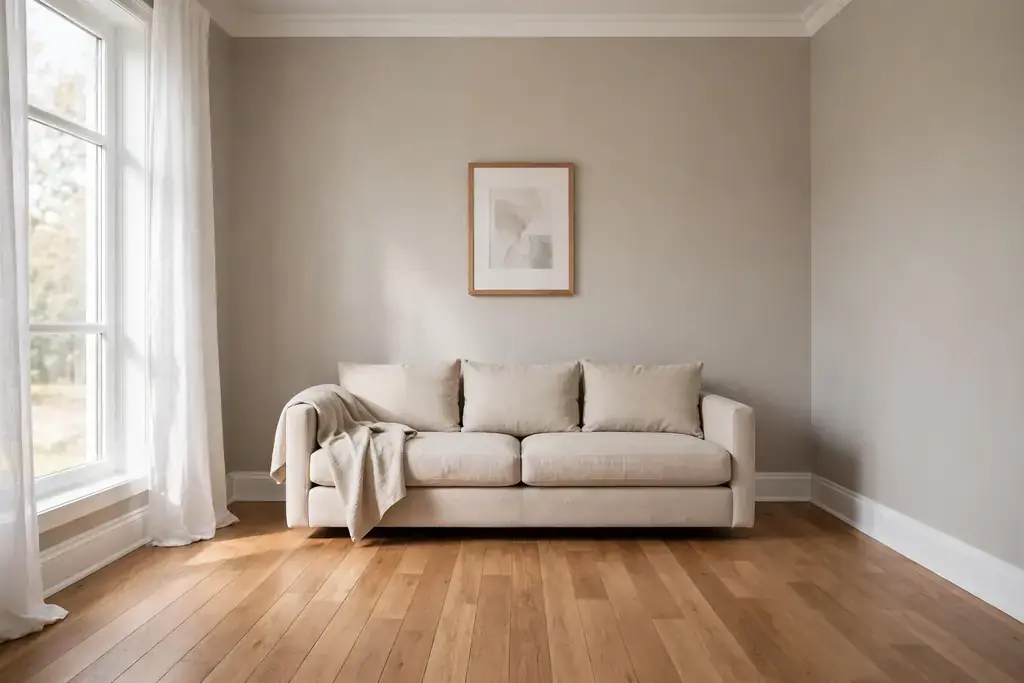
Interior painting prices, room by room
Per-room pricing assumes standard ceiling heights and walls in fair condition. Treat these as planning ranges — the quote for your room follows its prep bill.
| Space | Typical range | Notes |
|---|---|---|
| Small bedroom or office | $300 – $650 | Walls only, two coats, minimal patching |
| Living room | $450 – $900 | Larger wall area, more cutting-in around trim and openings |
| Kitchen | $350 – $750 | Less wall, more edges — cabinets and tile slow the brush |
| Bathroom | $250 – $550 | Small area; moisture-rated paint and fixture masking add care |
| Ceilings, per room | Add $150 – $400 | Overhead work, and water stains need sealing primer first |
| Trim and doors, per room | Add $100 – $300 | Sanding, enamel coats, and hardware masking |
Prep: the line item you cannot see
Two quotes for the same room differ mostly in the hours before painting. Filling and feathering nail holes and cracks, sanding rough patches, washing kitchen grease off the wall by the stove, sealing a water stain so it cannot bleed through — none of it shows in a photo of the finished room, and all of it shows in how the room looks in two years. A suspiciously cheap quote is usually a prep quote with the prep removed. Ask what the preparation includes, in words, and the cheap quote usually explains itself.
This is where painting meets the repair trades. Walls with real damage should be repaired before paint, not painted over: compound under paint shrinks and telegraphs. If your walls carry holes or cracks, the drywall repair cost guide prices that work, and booking the repair and the paint as one sequence — same pro or coordinated visits — beats painting first and patching through new paint later.
Coats, colors, and paint quality
Two finish coats over a tinted primer is the standard that holds color and coverage; one coat is a refresh, fine over the same color in good condition, and a false economy over anything darker or stained. Deep and saturated colors cost more — extra coats to build the color honestly, and premium-base paint to hold it. On paint grades: mid-grade and premium paints from the major makers cover better per coat and wash without burnishing, which frequently makes the premium can the cheaper job despite the shelf price. Pros get trade pricing on paint, so whether you supply the paint or the pro does, ask which product is in the quote and compare like with like.
Walls are one project; the house is another
The same preparation logic applies outside, where the stakes are higher because failure peels instead of just dulling. Homeowners planning both should look at interior painting services alongside exterior painting and sequence the work: repairs first, interiors while the weather is poor, exteriors in the dry season. Local pages describe the regional version — interior painting in Eugene covers the Pacific Northwest's moisture considerations, and interior painting in Greenville reflects a market where painting season runs long.
Painting also belongs on the calendar, not just the budget: it is the final step of the maintenance cycle, which is why it appears in the seasonal home maintenance checklist as the reward at the end of the repair list rather than the start of it.
Kitchens, bathrooms, and cabinets: the exceptions
Three spaces bend the standard pricing. Kitchens have the least open wall and the most obstacles, so the per-room figure buys more edging than area; they also carry grease film that must be washed off or the new paint fails in sheets within the year — a quote that includes degreasing is a quote that has painted kitchens before. Bathrooms need moisture-rated paint systems and genuine dry time between coats in a room that steams daily, and their small size means the per-square-foot math looks odd while the bill stays fair. Cabinets are the true exception: cabinet painting is a specialty of its own — doors removed, hardware catalogued, surfaces degreased, sanded, sprayed or fine-finished, and cured — and it is quoted as its own project, not as a thirteenth room. If a general quote folds cabinets into a suspiciously small number, that line deserves the same scrutiny as any other too-cheap figure.
Multi-room and whole-house math
Painting several rooms in one engagement is not just several room prices added together. Setup — protection, staging, equipment — happens once, colors are often shared, and a painter already in the house moves room to room without new travel or minimums, so the per-room cost typically falls as the count rises. The savings are real but not magical: walls still take the coats they take. Sequence matters more than discount-hunting. Empty rooms paint fastest, so renovations and moves are the cheap windows; occupied houses paint best in an order that keeps a bedroom and a bathroom always in service. And if the whole interior is in play, get the trim and ceiling decisions made once, globally — a house with one trim color and one ceiling white is cheaper to paint now and to touch up forever.
Finally, plan for the touch-up on paint day, not years later. Have the painter leave the leftover paint, labeled with the room, the product, the sheen, and the date — and write the color name and code in the house file even if the can survives. Paint lines get renamed and discontinued, and the difference between a ten-minute touch-up in year three and a full wall repaint is usually that one line of handwriting.
Paint is usually the finish on a bigger refresh — see every service the network offers before you sequence the work.
Frequently asked questions
Should I supply the paint or let the painter?
Either works, but let the pro choose the product in most cases: pros buy at trade prices, know which lines cover in two coats on your wall type, and the paint's performance becomes their problem. If you supply it, agree on the exact product and sheen beforehand so the quote and the can match.
How long does one room take to paint?
A standard room is a day of work with prep, two coats, and drying time between them — sometimes spread across two shorter visits. Rooms needing heavy patching, stain sealing, or trim enamel run longer. Furniture moving and masking are in the day, not on top of it, when the quote is honest.
What sheen should I choose?
Flat and matte hide wall flaws and suit ceilings and low-traffic rooms; eggshell and satin are the living-space standards because they wash; semi-gloss belongs on trim, doors, and in bathrooms and kitchens where moisture and scrubbing are routine. Mixing sheens room by room is normal — walls eggshell, trim semi-gloss is the classic pairing.
Can painters fix the wall damage they find?
Minor filling and sanding is inside every decent painting quote. Real damage — holes, cracks that move, water-stained sections — is repair work that should be scoped and priced as such before paint day, either by the painter if they do repairs or as a separate repair visit first.
Get a room-by-room painting quote
Name the rooms and their condition on one call — a matched pro prices prep and paint together.
Call (877) 705-6325